Showing posts with label caregiving resources. Show all posts

Wednesday, June 1, 2016

Can We Predict When a Person Is No Longer Useful to Society?


You could call it ironic.

Decades ago, a doctor by the name of Henry Heimlich read an article about people dying from choking on food in restaurants. Dr. Heimlich eventually developed a procedure to help dislodge food from a choking person's windpipe by applying abdominal thrusts, first described in 1974.

Variations of the procedure have been incorporated into first aid training for years, although its effectiveness is now in debate. But that didn't stop the doctor from springing into action in May of this year, when a woman seated next to him began choking on a piece of meat during a meal.

The Associated Press reported that Heimlich was having dinner when he noticed that the woman seated next to him began to get pink in the face and appeared to be choking. He got up behind her and began the Heimlich maneuver. A piece of hamburger with a bone in it popped out.

The woman, Patty Ris, was reported to be feeling fine afterward and credited Dr. Heimlich with saving her life. She was convinced that God had seated them side-by-side that day.

The irony of saving a person with his own procedure in a community setting should be especially sweet for this doctor, because Dr. Heimlich is now ninety-six years old, and the incident occurred at a senior living center in Cincinnati, Ohio, where he is a resident.

Who would have guessed that an elderly man in a senior center would be a lifesaver? How many times had workers and visitors walked by him and seen only an old man?

It's a good example of why society should not be allowed to be the judge of the boundaries on a person's usefulness. Indeed, usefulness to society should not be the criterion for care in the first place.

A life should be valued for its existence alone.

But that is often not the case in our culture. So bravo to Dr. Heimlich for reminding us that we have something to offer to others, regardless of our age and our physical or mental abilities. Thanks for reminding caregivers and health care providers that we serve humanity when we care for others. A lifetime of rich experiences and relationships and expertise may reside in the most humble of humans.

Thanks, Dr. Heimlich, for encouraging others to see every person as vital, regardless of age or ability.


Wednesday, May 20, 2015

Guest Writer: Linda Brendle

Bearing the pain of others | by Linda Brendle

My goal in life was not to become a caregiver. However, when my loved ones had a need, I stepped in to help.

Whether by small increments as the need progresses, or suddenly because of a catastrophic event, many of us become caregivers regardless of our intentions. Those of us who have been drafted into such a role, in searching for some meaning, often lean on Romans 8:28:

And we know that in all things God works for the good of those who love him, who have been called according to his purpose.


There is comfort in Paul’s words, but when you find yourself in the middle of hardship, it’s difficult to see how even God can find any good in your circumstances. As I watched Mom and Dad slip away into the abyss of dementia, I knew there was nothing good about Alzheimer’s. Still, through my experiences, God worked for my good and His purposes.

One good thing God did was to teach me the real meaning of Proverbs 3:5-6 which says:

Trust in the Lord with all your heart and lean not on your own understanding; in all your ways submit to him, and he will make your paths straight.

For most of my life, I found security in control. The need for control increased as I cared for Mom and Dad. I developed what I believe is a common, if often subconscious and always misguided, belief among caregivers that, if I did everything just right, my parents would get well. While this might be the case with some illnesses or injuries, it is not the case with Alzheimer’s. I soon learned that I had no control over anything. For a co-dependent like me, letting go of the reins, even if they were connected to nothing, was a terrifying thing. However, God understood, and He worked for my good and His purposes in all things in my life – even in caregiving and Alzheimer’s.

Another good thing that came out of my caregiving experience is that I have a story to share. “Story” is the modern word for what we used to call testimony, but whatever you call it, God can use your story when you share it.

Becoming an author was not one of my life goals either, but after I became a caregiver, I often sought advice from Aunt Fay. She had cared for both her mother and her husband, and one thing she advised was to keep a journal, because one day my experiences might be of help to someone else. I wrote sporadically, mainly after a particularly trying day, but when we planned an epic RV trip, I decided to keep a daily journal. That journal eventually became my book which is titled A Long and Winding Road: A Caregiver’s Tale of Life, Love, and Chaos. Here’s a brief look at what the book is about.

“Sometimes, reality really bites. Alzheimer’s has wrapped Mom’s brain into knots; vascular dementia has attacked Dad, and instead of carefree retirees, we have become caregivers. Regardless, dreams die hard, and we somehow stumbled into the purchase of a forty-foot motor home. That’s when all four of us set out on this seven-week trek across sixteen U.S. states. Now, Dad stopped up the toilet again, Mom wet her last pair of clean jeans, and David just announced he was hungry. My head is beginning to pound, and I know this isn’t going to be the easygoing retirement we imagined for ourselves.”

Linda Brendle takes you on a roller-coaster ride of emotional and spiritual challenges that many families are facing right now. Co-dependency, mental breakdowns, and finding love after divorce are just a few of the issues weaved into this journey of caregiving.

At its simplest level, my book is an entertaining story. My somewhat skewed perspective on life sometimes makes people laugh, so I intentionally included as much humor as possible. When going through the valleys, you have to laugh whenever you can. Solomon said, A cheerful heart is good medicine, but a crushed spirit dries up the bones. Generally speaking, dry bones don’t make very good caregivers.

At a deeper level my book offers caregivers the comfort of knowing they’re not alone. It also gives them the permission to share their own story and to admit that caregiving is hard. Even Moses couldn’t carry the burden of the children of Israel alone. During the battle against Amalek, Moses’ arms grew tired, so Aaron and Hur stood on either side of him and supported his arms. Without their help, the Israelites would have lost the battle. In Galatians 6:2, Paul tells us to Bear one another’s burdens, and thereby fulfill the law of Christ. People can’t help you bear your burdens if you don’t share them, and someone who is watching you may be reluctant to share her burdens if she thinks you have none.

At a third level my book encourages caregivers to take care of themselves and to continue to have a life of their own. It also offers the hope that, with God’s help, life can go on in spite of whatever trial you are facing.

In Joel 2:25 God makes this promise to the Israelites: I will repay you for the years the locusts have eaten. While this was a specific promise to a specific group of people, I believe we can apply the principal to our lives today. That principal gave me hope that there would be life after caregiving, but in order for there to be life after caregiving, you have to live through it. You have to put your own oxygen mask on first, and you have to maintain a life of your own.

When we are in the middle of hardship, it’s difficult to see what possible good even God can bring out of our situation. Paul gives us clues as to what a couple of those purposes might be.

2 Corinthians 1:3-4 Praise be to the God and Father of our Lord Jesus Christ, the Father of compassion and the God of all comfort, who comforts us in all our troubles, so that we can comfort those in any trouble with the comfort we ourselves receive from God.

Ephesians 2:10  

Ravi Zacharias once asked a group of church leaders this question: What portion of the world’s pain has God called you to bear? I don’t believe that God gave Mom Alzheimer’s, but I believe, in His sovereignty, He prepared me to care for her and to help bear her pain. He also prepared me to share my story and to help bear the pain of other caregivers.

When God shows you what work he has prepared for you to do and what portion of the world’s pain He has called you to bear, remember to lean on God rather than your own understanding. Then, share your story and help comfort someone with the comfort you have received from God.

About Linda:

After fifteen years as a family caregiver, Linda began writing to encourage, inspire and amuse other caregivers. She loves to travel and since retiring has traveled mostly by motorcycle and RV. She and her husband live in a small East Texas town where she gardens, writes, and works as part-time secretary for her church.


Find Linda at:


Links:
Author Video (Tour of RV): https://www.youtube.com/watch?v=1zUCl59eFA4

Friday, October 17, 2014

A Physician Understands

Photo courtesy Erik Thorson 2014

It's a small article by a physician, but I had only read a few lines before tears sprung to my eyes. The 2010 New York Times article is entitled "Offering Care for the Caregiver," and it hit a chord with me.

Although you can find caregiver support groups online and books on caregiving, it remains a closet profession. In the United States alone there are millions of people who care for a loved one, usually without reimbursement of any kind. As the population ages, this group will grow.

We are an unreached people group. We work long hours, give up the large and small conveniences others take for granted. It's a hard life, lived mostly unseen and forgotten by society as a whole.

We do it for love. But it does feel good when someone remembers to ask how we are. If you're a caregiver today, I pray God's blessing on your hands, feet, and heart. May He give you strength for this day, and joy in the duties ahead of you.

You are remembered. Someone does care. God sees every tear, every sacrifice, every small kindness you do for others. What you do is important, life-giving work.

I just wanted you to know.

Below is the link to the Times article. I hope it encourages you as much as it did me.


http://www.nytimes.com/2010/01/22/health/21chen.html?pagewanted=1&_r=2&adxnnlx=1410969612-WbmgwZo7VmIg7oVYQ6aRJg

Monday, September 15, 2014

25 Helpful Books For Caregivers


A Long and Winding Road: A Caregiver's Tale of Life, Love and Chaos by Linda Brendle


Ambushed by Grace: Help and Hope on the Caregiving Journey by Shelly Beach


Strength for the Moment: Inspiration for Caregivers by Lori Hogan


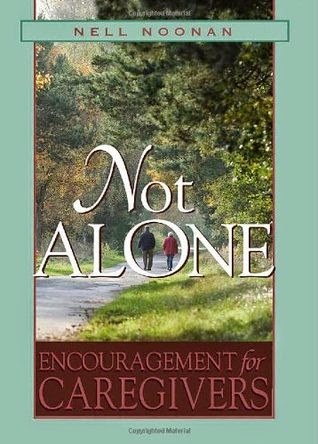
Not Alone: Encouragement for Caregivers by Nell Noonan


Out from the Shadows: 31 Devotions for the Weary Caregiver by Pam Thorson


Daily Comfort for Caregivers by Barbour Publishing


Transitions, Trust, and Triumph: A Daily Devotional for Caregivers by Jean D. Moody-Williams


Strength to the End: A Caregiver's Journey by Lucy P. Carter


Twice Blessed: Encouragement for the Caregiver and the Carereceiver by Laura Sowers


Help for the Caregiver: Facing the Challenges with Understanding and Strength by Michael R. Emlet


Hope for the Caregiver: Encouraging Words To Strengthen Your Spirit by Peter Rosenberger


Caregivers' Devotions to Go by Gigi Devine Murfitt


Blessings & Prayers for Caregivers: A Devotional Companion by Annetta Dellinger and Karen Boerger


Soul Care for Caregivers: How to Help Yourself While Helping Others by Susanne West


Finding Your Way: A Spiritual GPS for Caregivers by Sandy Lovern


Song in the Night: One Family's Journey From Darkness To Dawn by Pamela Thorson


Chicken Soup for the Soul: Family Caregivers: 101 Stories of Love, Sacrifice, and Bonding by Joan Lunden and Amy Newmark


124 Prayers for Caregivers by Joan Guntzelman


Devotions for Caregivers: A Month's Supply of Prayer by Marilyn Driscoll


A Caregiver? Me? by Lynda Bush


Strength & Courage for Caregivers: 30 Hope-Filled Morning and Evening Reflections by Terry Hargrave


The Hope of Glory: A Devotional Guide for Older Adults by Nancy Parker Brummett


At the Heart of the Matter: A Spiritual Journey for Caregivers by Dr. Eboni Ivory Green

Wednesday, August 27, 2014

The Invisible Man: When We're Feeling Alone


Their faces smile back at me from the Facebook page. They're posing for the camera at a local restaurant. They swam and laughed at the annual "Chicks in the Sticks" camp-out. They're planning a girls' trip to the coast. Events at which I wasn't invited and knew nothing about.

Things I used to do before I became a full-time caregiver and an invisible (wo)man.

Not that I could do any of those things, anyway. My job doesn't come with vacation time. My husband, youngest daughter, and I carry the duties of caring for my quadriplegic son largely without respite. Our other children help whenever they can, but the day-to-day responsibilities are ours.

And I wouldn't have it any other way. I love my job. I love caring for our son. The gains far exceed any sacrifices we've had to make along the way. Since my son's accident seventeen years ago, I've become a certified nurses' aide and then a licensed practical nurse. I've written two books. I speak regularly to others about God's work in our lives. My life is busy and fulfilling.

But sometimes, I see the abandon with which others do things that would take days of planning for me, things which are totally impossible for us now. They all look so carefree. So abundantly full of time and energy and each other.

So totally out of my reach.

Recently my children arranged a rare two-day outing for my husband and I to celebrate our anniversary. As we took in the sights of a nearby city, we saw vacationing families everywhere. People with boats and cabins and time on their hands. I asked my husband, the one who stays up every night to watch over our son as he sleeps on the ventilator, if it bothered him that we didn't have the lives of most people our age. I knew how much he used to look forward to retirement and a chance to travel the country.

He turned to me with a smile and said, "No, I don't. You and are doing something together that is important for our son and for God."

Wow.

How could I forget that Facebook and television and the world I see around me aren't the true reality, but snapshots of lives suffering their own hardships? Everyone feels alone at times.


"Each one should test their own actions. Then they can take pride in themselves alone, without comparing themselves to someone else."
-Galatians 6:4 NIV


While it's true that caregivers often work alone and behind the scenes, we aren't really invisible. We're the point men in a fierce battle for the lives of those who are vulnerable, disabled, or ill. We give hope to the living and comfort to the dying.

Yes, it can be a lonely job. But we're never invisible. At least not to the ones for whom we care and with whom we walk side-by-side.

And to the God who has called us to this wonderful journey.